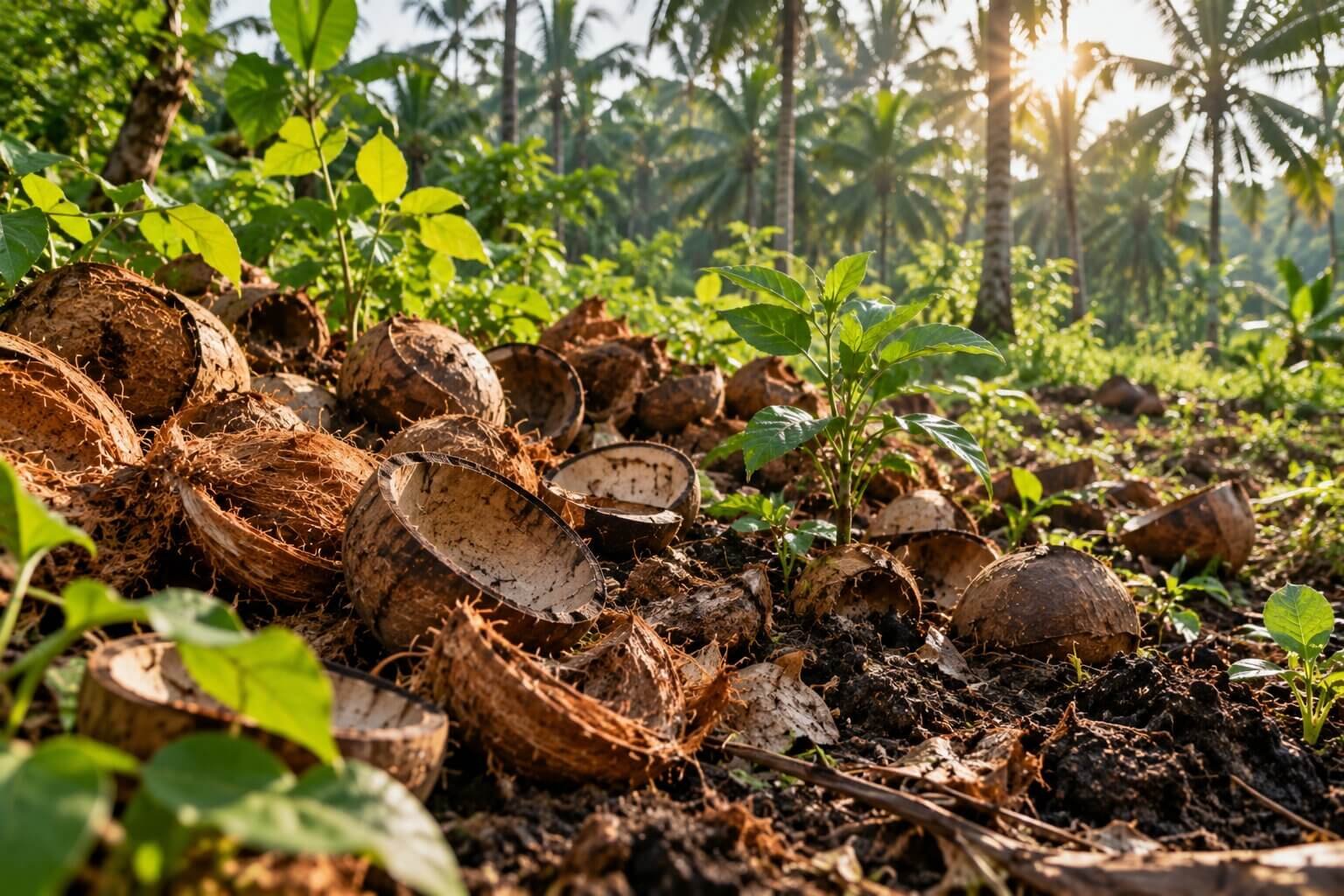
For generations, coconut shells were largely treated as waste. After the flesh and water were used, the hard shells were often discarded or burned in the open. Today, the same shells are the raw material for products traded around the world. Their journey shows how a by-product can become a source of long-term value.
A By-Product of Coconut Processing
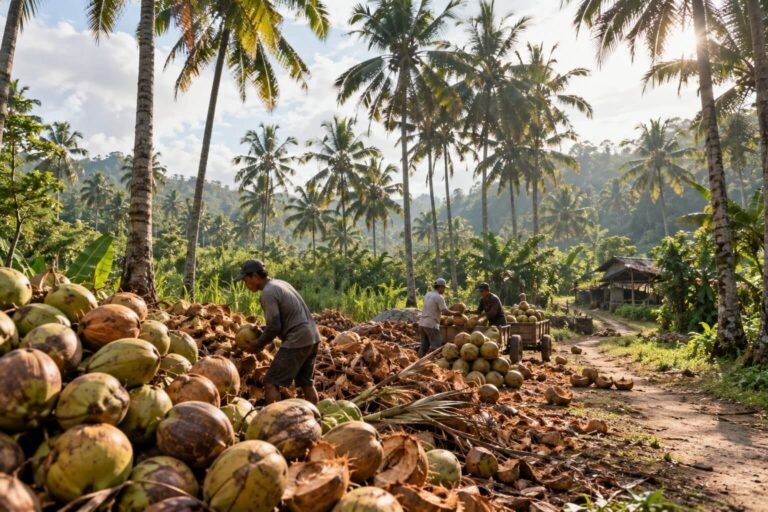
Coconut shells are generated wherever coconuts are processed for food, oil or other products. In a major coconut-producing country like Indonesia, this means a large and continuous supply of shells across many regions. Using this material turns something that would otherwise be discarded into a useful resource.
A Renewable Raw Material
Coconut palms produce fruit throughout the year over many years, so shells are generated continuously as part of normal coconut production. Unlike charcoal made from wood, coconut shell charcoal does not rely on cutting trees for its raw material, which is one reason many buyers look for coconut-based alternatives.
Creating Value for Local Communities
When coconut shells become a traded commodity, value flows back along the supply chain. Farmers, collectors and small processors can earn additional income from material that previously had little or no value. Building fair and long-term relationships with these partners is an important part of responsible sourcing.
From Shell to Charcoal to Briquettes
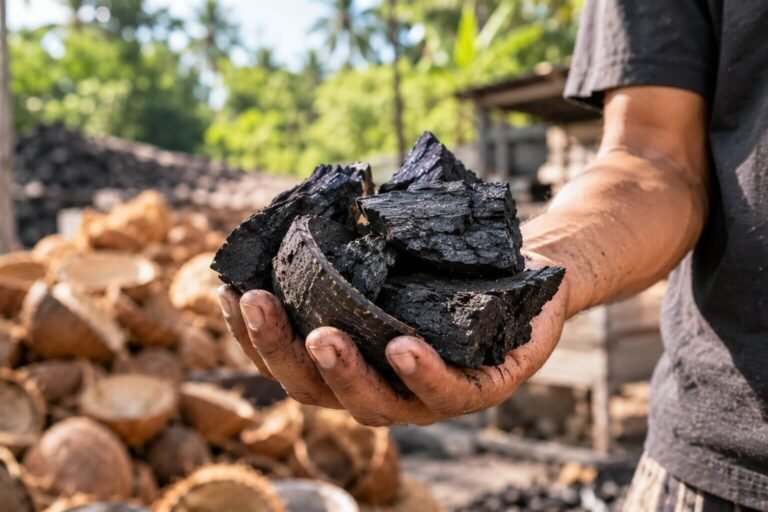
The shell is first carbonized to produce coconut shell charcoal. That charcoal can be sold as it is, or ground and pressed with a binder to make briquettes with a uniform shape. Each step adds value and opens different markets, from grilling to industrial applications.
What Responsible Sourcing Looks Like
- Using shells that are genuine by-products of coconut processing
- Working with local farmers and producers on fair, long-term terms
- Reducing waste throughout collection, processing and packaging
- Respecting the environment and biodiversity around sourcing areas
- Being transparent with buyers about how products are made
Questions Buyers Can Ask
Buyers who value responsible sourcing can ask suppliers where their raw material comes from, how producers are selected and supported, and how waste is managed. Clear answers are a good sign of a supplier focused on long-term partnerships.
Ready to discuss your requirements? Explore our coconut shell charcoal and briquettes, see how we support buyers through our export services, or request a quote and our export team will follow up with you.