Coconut shell charcoal and coconut shell briquettes come from the same raw material, but they are different products with different uses. Understanding the difference helps buyers choose the right product for their market and write clearer specifications.
The Short Answer
Coconut shell charcoal is carbonized coconut shell in its natural, irregular form. Coconut shell briquettes are made from that charcoal after it is ground, mixed with a binder and pressed into uniform shapes.
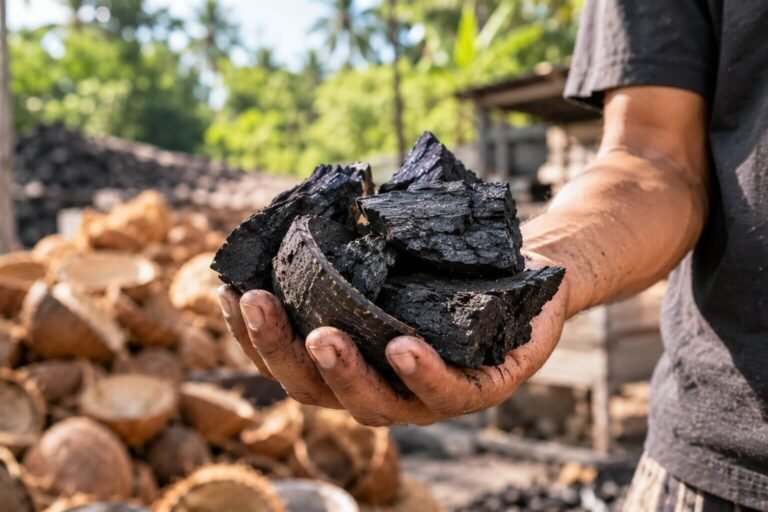
Coconut Shell Charcoal
After carbonization, the shells keep much of their original curved, irregular shape. The charcoal may be supplied as lumps, crushed pieces or powder depending on the buyer’s needs. It is often used for grilling or as raw material for further processing, such as briquettes or activated carbon.
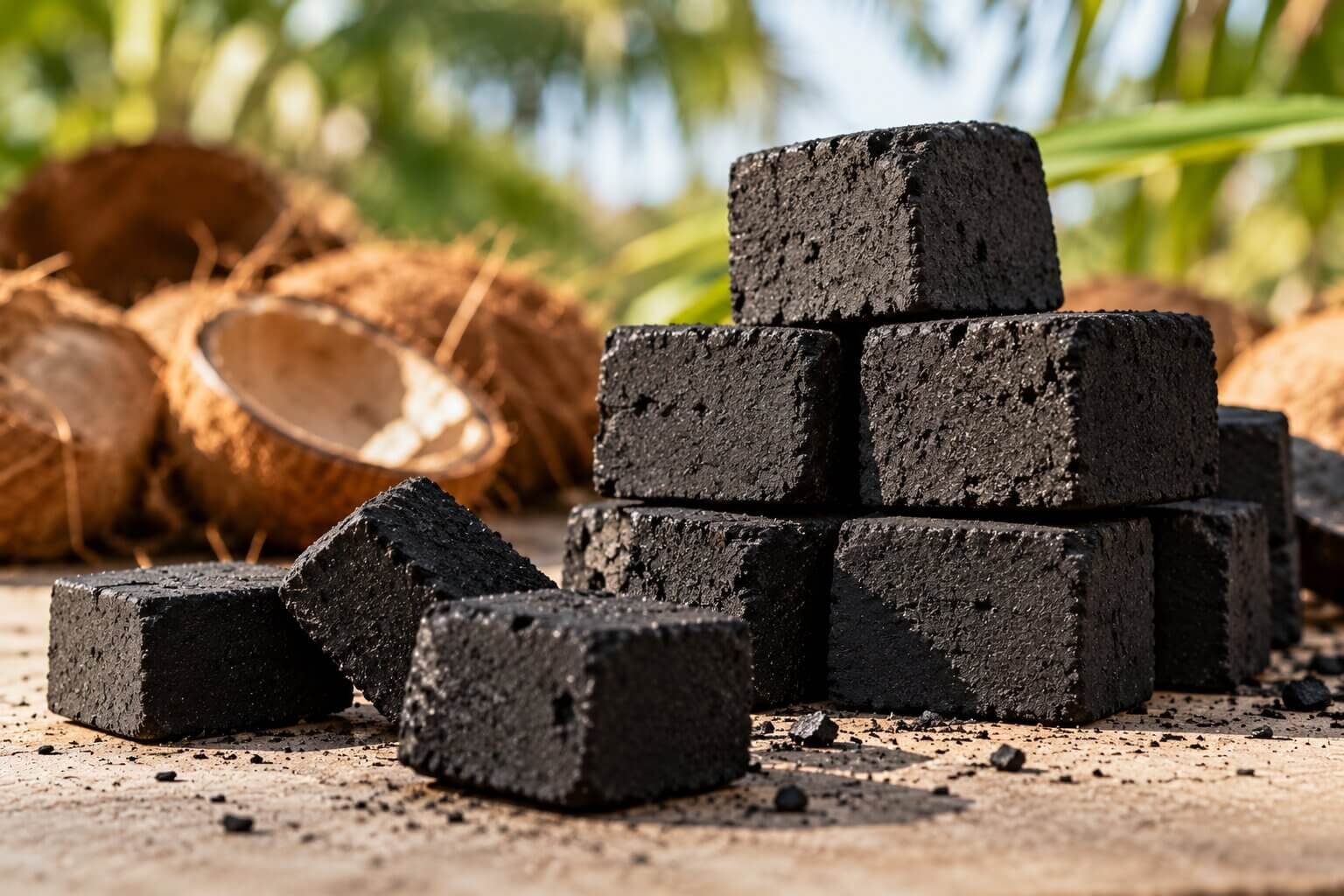
Coconut Shell Briquettes
To make briquettes, coconut shell charcoal is ground into powder, mixed with a binder (commonly a starch-based binder), pressed or extruded into a shape such as a cube or hexagon, and dried. The result is a product with consistent size and shape.
Key Differences at a Glance
| Aspect | Coconut Shell Charcoal | Coconut Shell Briquettes |
|---|---|---|
| Form | Irregular pieces, crushed or powder | Uniform pressed shapes |
| Processing | Carbonization and sizing | Carbonization, grinding, binding, pressing and drying |
| Consistency | Varies by piece | Uniform size and shape |
| Typical use | Grilling, raw material for further processing | Applications that need consistent shape and handling |
| Packaging | Often bulk sacks or bags | Bulk or retail-ready boxes |
Which One Fits Your Market?
Choose charcoal if you need raw material for your own processing or a natural product for grilling. Choose briquettes if your customers expect uniform pieces that are easy to handle, pack and use.
What to Specify When Sourcing
For both products, discuss fixed carbon, ash content, moisture, volatile matter and calorific value, confirmed by laboratory testing. For briquettes, also agree on shape, dimensions and packaging. Clear specifications make quotations comparable and deliveries consistent.
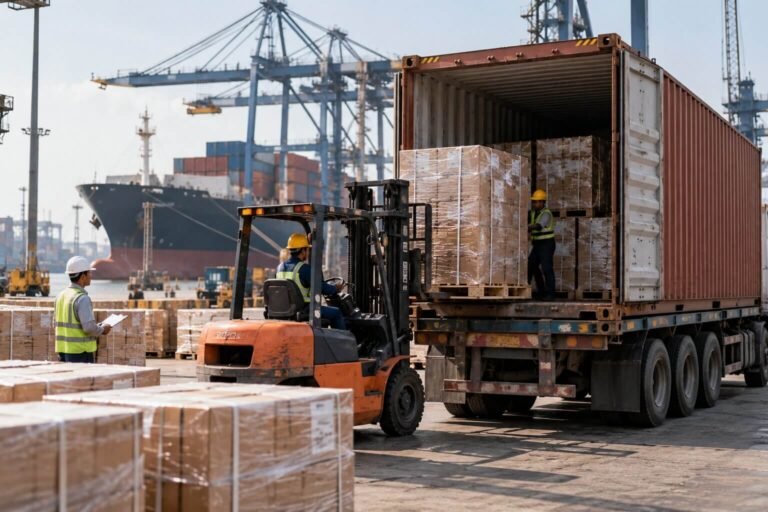
Ready to discuss your requirements? Explore our coconut shell charcoal and briquettes, see how we support buyers through our export services, or request a quote and our export team will follow up with you.